


Yes, you can visit Los Angeles without a car. It is far less painful than the city’s reputation suggests. Rail now reaches Long Beach, Santa Monica, Pasadena, Hollywood and the airport, buses cover most of the gaps and ride-hailing handles the rest. What the city demands is planning. Choose a base near a rail line, group each day by area and accept that a cross-city hop takes an hour rather than 20 minutes.
Los Angeles has no single centre. It is a chain of neighbourhoods loosely tied together, which is both why driving feels compulsory here and why it is not. Once you stop trying to see Malibu, Downtown and Pasadena on the same day, the transit map starts to look entirely reasonable.
Below you will find airport transfers, the lines that matter, where to base yourself, what to see by area, the tours that solve the awkward gaps, where to eat and how to stay online.
Los Angeles travel guide without a car
Treat the region as 5 clusters, each walkable in itself: Downtown with Little Tokyo and the Arts District, Hollywood running east into Los Feliz, the Westside around Santa Monica and Venice, the Exposition Park and Crenshaw corridor and the Pasadena end of the A Line. Spend a day inside a cluster, then use rail to move between them.
Getting in from the airports
Los Angeles International Airport (LAX) sits close to the coast, well south of the areas most visitors want. The LAX/Metro Transit Center station connects the airport to the Metro rail network, with a shuttle running between the terminals and the station until the Automated People Mover opens. Check the current arrangement on flylax.com before you land, because this corner of the airport has been a building site for years.
The FlyAway bus is the other reliable option, running non-stop from the terminals to Union Station downtown, where you connect to rail in every direction. Hollywood Burbank Airport is the quiet alternative for domestic arrivals, with its own rail station a short shuttle ride away and a fast run into Union Station.
How the Metro network works
The system is run by Los Angeles County Metropolitan Transportation Authority, known to everyone as Metro. Rail lines carry letters rather than the old colour names. The network was rebuilt in 2023 so trains run through downtown instead of terminating there.
Rail lines worth knowing
The A Line runs from Long Beach through downtown up to Azusa, passing Watts and Pasadena along the way. The B Line is the subway from Union Station under Hollywood to North Hollywood, which is the fastest route to the Walk of Fame. The E Line links Santa Monica to downtown and on to East Los Angeles. The C Line and K Line cover the airport corridor and the Crenshaw district. The D Line serves the Wilshire corridor and is being extended westward.
Buses, bikes and shuttles
Metro buses fill in everywhere rail does not reach. Busway routes behave much like rail, with their own lanes. Santa Monica runs Big Blue Bus, Culver City runs its own service and the city of Los Angeles runs DASH minibuses on short local loops, including the shuttle that climbs to Griffith Observatory from the nearest B Line station. Metro Bike Share covers downtown and the coast, where the beach path makes cycling between Santa Monica and Venice genuinely pleasant.
Paying for your journey
Fares work through the TAP card, which you load at station machines or in the Metro app. Open payment options have been rolling out. Fares, daily caps and transfer rules change periodically, so check metro.net rather than relying on an old figure. Buses generally require exact payment if you use cash, which is a strong argument for loading a card on arrival.
Where to base yourself
Your hotel choice matters more here than in most cities, because it decides how much of your day disappears in transit. Walking distance to a rail station beats a nominally nicer address that needs a car.
| Area | Rail access | Suits you if |
|---|---|---|
| Downtown | A, B, D, E lines meet here | You want museums, food halls and the best onward connections |
| Hollywood | B Line | You want nightlife, studios and quick access to Griffith Park |
| Koreatown | B and D lines | You care about eating late and paying less for a room |
| Santa Monica | E Line terminus | You want the beach, the pier and a walkable seafront base |
| Pasadena | A Line | You prefer quiet streets, older architecture and good museums |
What to see, by area
Group your sightseeing geographically and the city stops fighting you. These 4 clusters cover almost everything a first visit needs.
Downtown and Little Tokyo
Start at Union Station, which is worth 20 minutes on its own for the tiled waiting hall, then cross to Olvera Street and the old plaza. Grand Central Market feeds you between stops. The Broad and the Museum of Contemporary Art sit within a block of Walt Disney Concert Hall, the Bradbury Building interior is free to glimpse from the lobby and Angels Flight still climbs Bunker Hill. Little Tokyo and the Arts District are an easy walk east.
Hollywood, Griffith and Los Feliz
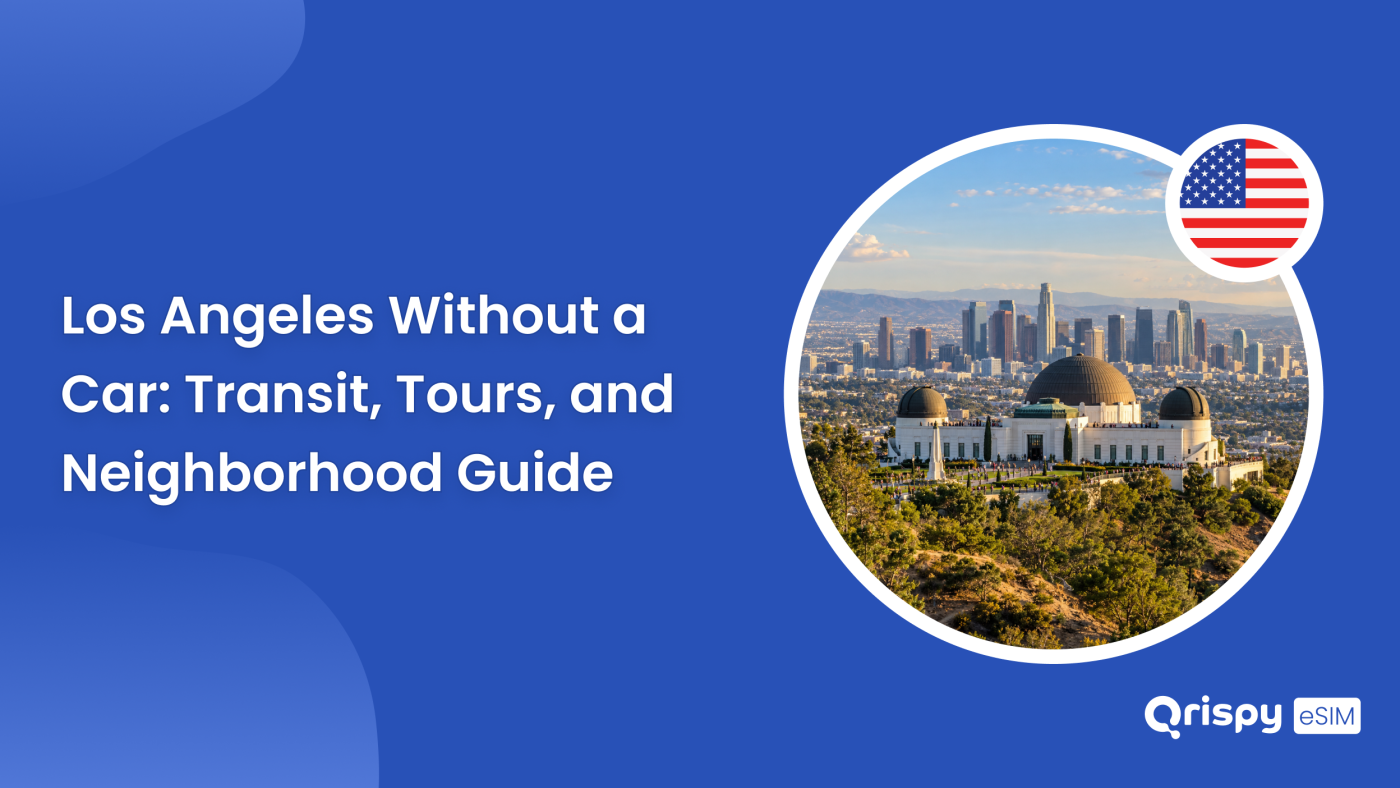
The Walk of Fame is busy, brief and best treated as a photograph rather than an afternoon. The real draw sits above it: Griffith Observatory, where entry to the building has traditionally been free, with a ticketed planetarium show and the best skyline view in the city. Take the B Line then the shuttle bus rather than attempting the hill on foot. Los Feliz and Thai Town below reward an unhurried evening.
Santa Monica and Venice
The E Line ends a few blocks from Santa Monica Pier, which makes the beach an easy half day from downtown. Walk or ride south along the beach path to Venice, where the boardwalk, the skate park and the canals sit within a compact stretch. Abbot Kinney Boulevard handles the shopping. Bring layers, because the marine layer keeps the coast cooler than inland neighbourhoods all morning.
Pasadena, Exposition Park and Watts
Pasadena gives you Old Pasadena, the Norton Simon Museum and streets of Craftsman houses, all from A Line stations. Exposition Park on the E Line holds the Natural History Museum and the California Science Center, home of the space shuttle Endeavour. Further south on the A Line, the Watts Towers rise beside the station at 103rd Street, an extraordinary piece of outsider architecture that almost no visitor bothers to reach.
Tours that fill the gaps
Some Los Angeles experiences genuinely resist public transport, so an organised tour is the honest fix rather than a compromise. Studio tours at the major lots run as timed experiences that include transport within the lot. Architecture walking tours cover downtown in detail, including interiors you cannot otherwise enter. Coach tours reach Malibu, the Hollywood Sign viewpoints and the Getty Center more efficiently than a chain of buses would. For the Getty itself, a bus along Sepulveda Boulevard drops you at the entrance tram, though route numbers change, so confirm before you set out.
Eating around the rail lines
Los Angeles food follows immigration rather than postcodes. Most of it sits near a station. Koreatown does barbecue, stews and late-night bar snacks within a few blocks of the D Line. Thai Town, north of Hollywood, is the place for boat noodles and papaya salad with real heat. Boyle Heights on the E Line is tacos al pastor and birria territory. Little Tokyo covers ramen, sushi and matcha desserts. Downtown food halls let a group of mixed appetites eat together. The Sunday market in the Arts District is worth timing your weekend around.
Practical basics and staying safe
The currency is the United States dollar, plugs are the flat 2-pin and 3-pin types on 120 volts and emergency services answer on 911. Tipping is expected in restaurants and bars at the usual American rates. Sunscreen matters year-round, even under the coastal cloud that locals grumble about through late spring.
- Los Angeles is broadly safe for visitors, with the usual advice to stay aware around late-night transit stations and quiet streets.
- Downtown includes areas with visible homelessness, which is a social problem rather than a threat to you, though it can feel confronting.
- Distances are deceptive, so check journey times before committing to an evening plan across the city.
- Earthquakes are a background fact of life here, with hotels posting guidance worth reading once.
eSIM for Los Angeles to stay connected
Without a car, your phone becomes the trip. Live arrival times, a rerouted bus, a restaurant that shut early: you will check all of it constantly, usually while standing on a platform. Coverage across the basin is good, but the practical question is how you buy data rather than whether a signal exists.
- Public Wi-Fi covers hotels, cafes, libraries and many station areas. It works for a quick map check while remaining a poor choice for banking.
- A local prepaid SIM card means finding a store, queueing and swapping out the SIM that carries your usual number.
- Carrier roaming from home takes no effort and usually costs the most, sold as a daily pass or folded into a premium tariff. Confirm the terms with your operator before you fly.
- A travel embedded SIM (eSIM) installs before departure, activates on landing and leaves your home number in place for calls and verification codes.
Qrispy runs on that last model. You install the One eSIM once, keep it on the device permanently and use it in 210+ countries and regions, so the same profile covers your next trip anywhere. Data comes 3 ways on the same eSIM. Global Wallet is pay as you go with credits that never expire, at rates that vary by destination and are shown before you confirm. Fixed Plans are prepaid for 3, 7, 15 or 30 days with a set allowance. Unlimited Data Plans cover 90+ countries for 3, 7, 15 or 30 days, subject to fair use or temporary speed management during very heavy usage or congestion.
2 details matter for a transit-based trip. Unlimited personal hotspot is included on every plan, so a travelling companion navigating on a second phone shares your connection with usage taken from your balance. The Qrispy line carries data only rather than a phone number, which fits a dual SIM setup neatly: leave your home SIM active for calls and one-time passcodes, set Qrispy as the cellular data line, then turn Data Roaming on for Qrispy and off for the primary SIM. Smart IP Routing exits traffic at the nearest Point of Presence (PoP), with a live site in Los Angeles itself, which keeps latency low across the basin.
Check your handset first on the Qrispy device compatibility checker, then pick a plan from the Qrispy eSIM plans for the United States. Travel Buddy, the in-app assistant, helps stitch a route between neighbourhoods and flags what is worth your time nearby.
Frequently asked questions
Can you visit Los Angeles without driving?
Yes. Rail reaches Long Beach, Santa Monica, Pasadena, Hollywood and the airport corridor, while buses and shuttles cover most of the remaining ground. Plan each day around a single cluster of neighbourhoods, stay within walking distance of a station and use ride-hailing for the occasional evening gap.
How do you get from LAX?
The LAX/Metro Transit Center connects the airport to Metro rail, with a shuttle running from the terminals until the Automated People Mover opens. The FlyAway bus runs non-stop to Union Station downtown, where you can change to rail. Taxis and ride-hailing use designated pickup areas rather than the terminal kerb.
Where should you stay without a car?
Downtown gives you the best connections, since 4 rail lines meet there. Hollywood and Koreatown sit on the subway with strong food and nightlife. Santa Monica works if you want the beach and accept longer trips inland. Pasadena suits quieter mornings. Prioritise walking distance to a station.
Is the Metro safe at night?
Metro is generally fine, with the usual urban caution applying after dark. Wait in lit areas near other passengers, keep your phone out of sight on the platform and choose busier carriages late on. Service frequency drops at night, so check the last departure before you settle in.
How many days do you need?
4 days lets you cover downtown, Hollywood with Griffith Observatory, the coast and a further cluster such as Pasadena without rushing. 3 days works if you drop the coast or the museums. A week gives you room for a studio tour, a day trip south and the quieter neighbourhoods.
Will my phone work in Los Angeles?
Yes, provided your handset supports local networks and your account allows international use. Carrier roaming is the simplest and usually the most expensive route. A travel eSIM bought before departure activates when you land, keeps your home number live for calls and codes and saves hunting for a shop.
Stay connected anywhere with Qrispy eSIM
Stay connected in 210+ countries with Global Wallet, Fixed Plans and Unlimited Data. No contracts, no roaming fees, no expiry. Download the Qrispy eSIM app today and start your journey.

United States Plans
Prepaid data plans for planned stays
Loading pricing plans...