


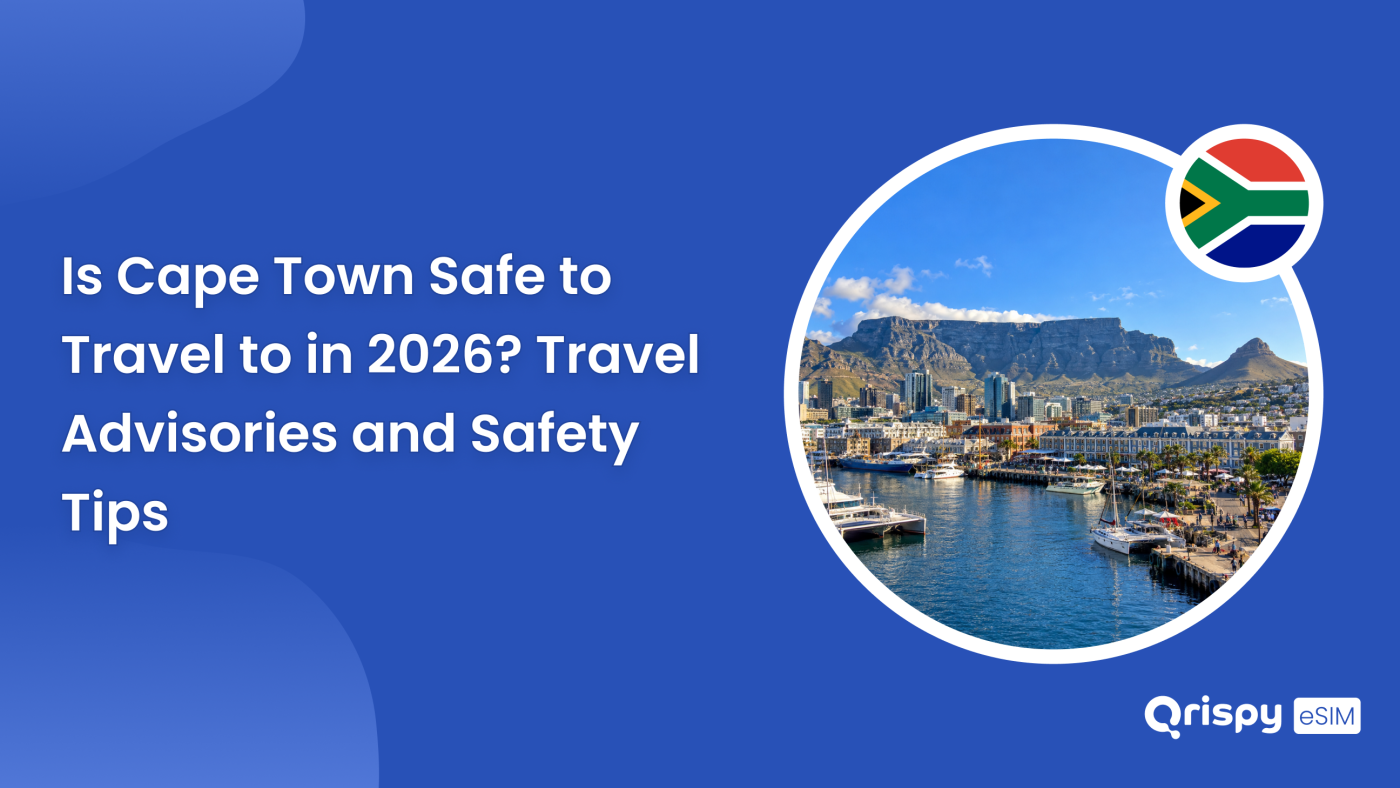
Yes, Cape Town is safe for most visitors in 2026, provided you treat it as a large city with deep inequality rather than as a resort town. The overwhelming majority of trips pass without incident. Real risk does exist. It is concentrated in particular places at particular moments and it is almost always opportunistic rather than aimed at you personally.
That answer needs unpacking, because the city produces 2 very different sets of stories. Visitors come home talking about sunrise on Table Mountain, the wine estates above Constantia and slow afternoons in Kalk Bay. They also read national crime figures that look frightening. Both pictures are accurate. What separates them is geography.
Below you will find what the advisories actually say, how the neighbourhoods behave, how to move around, what to know on the mountain and at the beaches, how to handle money and power cuts and the habits that remove most of the risk.
So, is Cape Town safe to travel?
Yes, for a prepared traveller. Serious violent crime is heavily concentrated in gang-affected suburbs of the Cape Flats, a long way from the City Bowl, the Atlantic Seaboard and the southern peninsula where visitors spend nearly all their time. What reaches tourists is mostly property crime: a phone snatched from a hand, a bag lifted off a chair, a car window broken at a trailhead or a mugging on an empty street after dark.
None of that argues for staying away. It argues for adjusting a handful of habits. Residents do this without thinking. They do not walk while staring at a screen. They leave nothing visible in a parked car, order a ride rather than walk 10 minutes after dark and stick to busy lit routes. Copy that behaviour and your trip will look like almost every other trip, which is to say uneventful.
What the travel advisories say
Government advice on South Africa sits squarely in the middle of the scale. The United Kingdom’s Foreign, Commonwealth and Development Office, the United States Department of State and their Canadian and Australian counterparts publish country pages describing high levels of violent crime, advising against walking alone after dark and naming particular roads to treat carefully. None of them tells people to stay away from Cape Town. Wording is revised regularly, so read the live version rather than a summary of it. Start with the official foreign travel advice pages, then cross-check your own government’s guidance. An advisory covers a whole country, so a warning prompted by conditions in a distant province says little about an evening in Sea Point.
Cape Town neighbourhoods and how they feel
Where you stay shapes your sense of safety more than any other decision. Almost all visitor accommodation sits in a narrow band running from the Waterfront around the Atlantic Seaboard and up into the City Bowl, with a second cluster along the False Bay coast. Those areas are busy, well patrolled and walkable in daylight.
| Area | How it feels | What to watch |
|---|---|---|
| City Bowl and Gardens | Lively by day, quieter after dark. | Phone snatching on empty side streets. |
| Victoria and Alfred Waterfront | Heavily secured, busy into the evening. | Ordinary pickpocketing in crowds. |
| Sea Point and Green Point | Long promenade, good until early evening. | Bags left on benches or cafe chairs. |
| Camps Bay and Clifton | Relaxed beach strip, resort feel. | Break-ins at beach and viewpoint parking. |
| Cape Flats townships | Rich cultural life, best seen guided. | Self-driving or wandering independently. |
Township tourism deserves a note. Khayelitsha, Langa and Gugulethu have real cultural life, excellent food and community-run operators who employ local guides. Visit that way and you will be looked after. Do not drive in alone to look around. Do not let a mapping app route you through unfamiliar parts of the Cape Flats at night to save 5 minutes.
Getting around the city safely
Taxis, e-hailing and public transport
E-hailing apps are the default for visitors and for a great many residents. Book inside the app, check the registration plate and driver photo before opening the door and share the trip with a contact. MyCiTi buses are clean, cashless and useful along the Atlantic Seaboard and out to the airport, using a rechargeable card you tap on boarding. Metrorail is a different proposition, because the Southern Line to Muizenberg, Kalk Bay and Simon’s Town is a beautiful ride when it runs well, though service levels and security on the network have varied considerably in recent years, so ask locally on the day. Minibus taxis are the backbone of commuting, fast and cheap, but their routes are learned rather than published.
Driving and car hire
Hiring a car makes the peninsula, the winelands and Chapman’s Peak Drive far easier. Driving is straightforward once you adjust to the left-hand side. Keep bags in the boot, keep windows up at junctions and leave nothing visible when you park at a trailhead, because smash-and-grab thefts at traffic lights take seconds. Petrol stations are staffed, so an attendant fills the tank and expects a small tip. Informal parking attendants in reflective vests watch cars in most public bays.
Table Mountain, beaches and the outdoors
The mountain is why many people come. It also demands more respect than its city-centre location suggests. Weather changes fast on the plateau, cloud swallows a path in minutes and the Table Mountain Aerial Cableway suspends operations in high wind, which strands walkers who planned to ride down. Carry layers, water and a charged phone even on a short route.
Robberies on quiet trails do happen occasionally, so walk in a group of 3 or more, choose busy routes such as Platteklip Gorge or Lion’s Head at popular times and leave conspicuous valuables behind. India Venster is a scramble rather than a walk. On the coast, the Atlantic side is startlingly cold thanks to the Benguela current, False Bay is warmer and rip currents are common on both. Swim where lifeguards are on duty and note the flag system run by the Shark Spotters programme at Muizenberg, Fish Hoek and St James. Baboons on the peninsula are wild animals: never feed them and keep car windows closed at Cape Point.
Money, power cuts and daily habits
Cards work almost everywhere, including in taxis and at market stalls. Draw money from a machine inside a shopping centre or a bank rather than a street-facing machine, cover your personal identification number (PIN) and never accept help from a stranger at the machine.
South Africa has lived for years with scheduled national power cuts, known locally as load-shedding. Their frequency shifts with the state of the grid. When cuts are in force, traffic lights go dark and street lighting can fail, so treat unlit junctions as 4-way stops, carry a small torch and keep a power bank charged. Most hotels and larger restaurants run backup power.
Health, water and emergency numbers
Municipal tap water in the Cape Town metro is treated to national drinking standards and residents drink it straight from the tap, so pack a refillable bottle. The Western Cape is malaria-free, which surprises visitors who assume otherwise about southern Africa. Sun is the underrated hazard, because ultraviolet (UV) levels are high and the wind masks the burn.
Save the emergency numbers before you need them. Police are on 10111, ambulance and fire services on 10177 and 112 from a mobile phone reaches an emergency call centre. Private hospitals expect payment or proof of insurance, so travel cover that includes medical evacuation is worth having.
Cape Town safety tips worth following
- Book a ride rather than walking after dark, even for a short distance.
- Keep your phone pocketed on the street and check it inside a shop.
- Leave nothing visible in a parked car, including a jacket or a cable.
- Carry a passport copy and leave the original in the accommodation safe.
- Hike in a group, tell someone your route and set a return time.
- Split cards and cash between 2 places so a single loss is not total.
- Choose community-run operators for township visits instead of exploring alone.
eSIM for Cape Town to stay connected
A working phone changes how safe the city feels. It is how you order a ride instead of walking and how you send a live location to whoever is waiting. Standing on a pavement fiddling with a handset to hunt for signal is the behaviour to avoid, so sort your data out before you land.
Wi-Fi, local lines and roaming
Public Wi-Fi is easy to find in hotels, cafes, shopping centres and around the Waterfront. It is fine for uploading photos in the evening and useless the moment you are standing at a trailhead. A local prepaid Subscriber Identity Module (SIM) card from a South African network gives you proper coverage, though registration rules mean you need your passport and an address at the point of sale, which costs time on arrival and leaves you juggling 2 numbers. Roaming on your home plan works the moment you land and usually carries a clear premium, sold either as a daily pass or as a bundled allowance, so check what your carrier charges before you fly.
An embedded SIM (eSIM) removes most of that friction. You buy and install a data profile before departure, land with signal already working and keep your usual number live for calls and one-time passcodes. Nothing physical changes hands and there is no queue at the airport.
Where Qrispy fits
Qrispy is a global eSIM provider built around a single One eSIM that you install once and keep on the device forever, with coverage in 210+ countries and regions. Top up the Global Wallet and pay as you go with credits that never expire. Fixed Plans run for 3, 7, 15 or 30 days when you know exactly how long you are staying. Unlimited Data Plans cover 90+ countries for 3, 7, 15 or 30 days, with fair use or temporary speed management possible during very heavy usage or congestion. Multi-network access with automatic switching to the best available local network matters on a peninsula full of mountains and dead spots. Unlimited personal hotspot is included on every plan. Run your handset through the eSIM device compatibility checker, then choose from Qrispy eSIM plans for South Africa.
Set-up takes under 3 minutes. Choose a plan, download the Qrispy eSIM app, follow the guided install, then set Qrispy as your mobile data line and turn Data Roaming on for it while leaving it off for your primary SIM. The Qrispy line carries data rather than a phone number, so calls and messages travel over Wi-Fi Calling on your home line or through apps such as WhatsApp and FaceTime. Travel Buddy, the in-app assistant, suggests routes and neighbourhoods, surfaces local safety and connectivity guidance and translates phrases out on the peninsula.
Frequently asked questions
Is Cape Town safe for solo travellers?
Yes, with planning. Solo visitors enjoy Cape Town every day by staying in busy neighbourhoods such as Sea Point, Gardens or the Waterfront, using e-hailing after dark and joining group hikes rather than walking trails alone. Share your location with someone at home and trust your instinct about an empty street.
Which areas should you avoid?
Avoid the Cape Flats townships unless you are with a reputable community-run operator. Treat quiet industrial streets around Salt River and the edges of the city centre with care after dark. Deserted beaches, unlit promenades and lone mountain paths carry more risk than any particular suburb does in daylight.
Can you drink the tap water?
Yes. Municipal tap water in the Cape Town metro is treated to national drinking standards and residents drink it straight from the tap, so a refillable bottle saves money and plastic. Further out in rural Western Cape or up in the mountains, ask locally first and treat stream water.
How should you use e-hailing safely?
Book through the app rather than accepting a kerbside offer, check the registration plate and driver photo before getting in and share the trip with a contact. Keep your phone out of view while you wait, ideally inside a shop. Most residents rely on e-hailing after dark.
Is it safe to hike Table Mountain?
Yes. Thousands of people do it every week without trouble. Weather turns fast on the plateau, so carry layers, water and a charged phone even on a short route. Robberies do occasionally happen on quiet paths, so walk in a group and stick to popular routes such as Platteklip Gorge.
Do you need a local SIM card?
No. A travel eSIM installed before departure gives you data the moment you land, without the passport paperwork and queuing a South African prepaid line involves. Keep your home number active for calls and one-time passcodes, set the eSIM as your data line and you arrive with coverage.
Stay connected anywhere with Qrispy eSIM
Stay connected in 210+ countries with Global Wallet, Fixed Plans and Unlimited Data. No contracts, no roaming fees, no expiry. Download the Qrispy eSIM app today and start your journey.

South Africa Plans
Prepaid data plans for planned stays
Loading pricing plans...